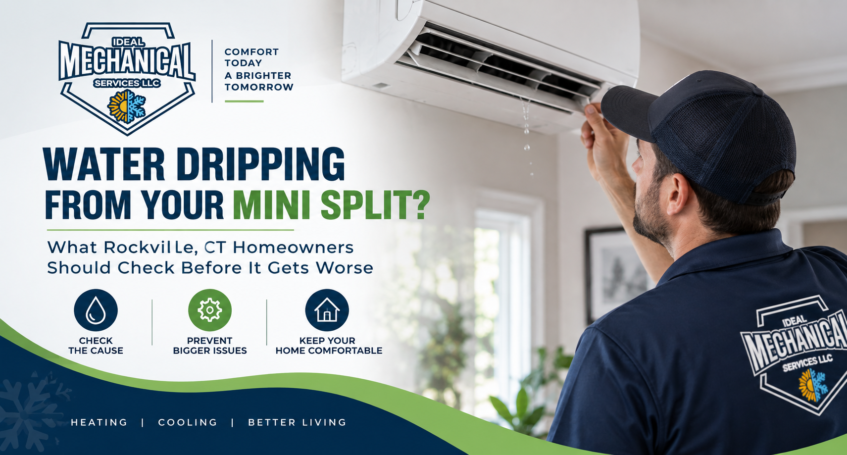
Water Dripping From Your Mini Split? What Rockville, CT Homeowners Should Check Before It Gets Worse
A ductless mini split is designed to keep your home comfortable, not leave water running down the wall. If you notice dripping from the indoor unit, moisture underneath it, or stains developing nearby, it is worth paying attention to the problem rather than simply wiping up the water.
Mini splits naturally produce condensation while cooling and dehumidifying indoor air. Under normal conditions, that moisture is collected and carried safely outside through a drain system. When water begins appearing inside your Rockville, CT home, something may be preventing that process from working properly.
Why Does a Mini Split Produce Water?
When warm, humid indoor air passes across the cold evaporator coil, moisture in the air condenses. This is similar to the water that forms on the outside of a cold glass on a warm day.
The mini split collects this moisture in a drain pan and directs it through a condensate drain line. Seeing water draining outside during humid weather can therefore be normal. Water dripping from the indoor unit into the room, however, is something homeowners should investigate.
Companies such as Ideal Mechanical Services provide heating and cooling services for ductless systems and other HVAC equipment, making professional inspection an option when the source of a leak is not obvious.
A Clogged Drain Line May Be the Problem
One common area to investigate is the condensate drain.
Over time, dirt, dust, biological buildup, or other debris can interfere with drainage. If water cannot move through the line properly, it may back up into the indoor unit and eventually overflow.
You might first notice an occasional drip. Later, there may be more noticeable water around the unit or staining on the wall.
Because the drainage setup varies by installation, avoid taking apart components when you are unsure how the system is designed. A qualified HVAC technician can inspect the drainage system and determine whether a blockage or another issue is responsible.
Check Whether the Filters Are Dirty
Mini split filters help prevent airborne debris from collecting inside the equipment. When filters become heavily clogged, airflow through the unit may decrease.
Reduced airflow can affect how the indoor coil operates. In some circumstances, the coil can become unusually cold and develop ice. When that ice eventually melts, the resulting water may overwhelm normal drainage or appear where it should not.
Homeowners should follow the manufacturer’s instructions for checking and cleaning accessible filters. If ice continues to appear after normal maintenance, the system should be professionally inspected rather than repeatedly restarted.
Look for Ice on or Around the Indoor Unit
Visible ice is another sign that should not be ignored.
Ice formation can have different causes, including airflow problems or issues requiring professional diagnosis. A frozen system does not automatically mean it needs more refrigerant, and adding refrigerant is not a homeowner maintenance task.
If the unit repeatedly freezes, leaks after thawing, or does not cool properly, turn to a trained HVAC professional. Homeowners considering Affordable Ductless Mini Split Installation in Rockville CT should also remember that correct sizing, placement, drainage, and installation all contribute to reliable long-term operation.
Installation and Drainage Position Matter
Condensate needs a clear path away from the indoor unit. Depending on the system design, gravity or a condensate pump may be involved.
A drain line with an installation problem, an improperly positioned indoor unit, or an issue with a condensate pump can interfere with normal water removal. Sometimes a problem becomes noticeable soon after installation; in other situations, movement, buildup, or component wear may contribute later.
A professional can check whether the unit is mounted correctly and whether the condensate system is moving water as intended.
Don’t Ignore Wall or Ceiling Stains
A few drops of water may seem minor, especially if the mini split continues cooling normally. However, repeated moisture can affect paint, drywall, flooring, trim, and nearby furnishings.
Look for discoloration, bubbling paint, damp drywall, musty odors, or moisture underneath the unit. These signs can suggest that leaking has been occurring longer than you realized.
If water is close to electrical components, outlets, or wiring, avoid touching or opening the equipment. Shut the system down if it is safe to do so and contact a qualified professional for assistance.
Pay Attention to When the Dripping Happens
The timing of the leak can provide useful information to a technician.
Does it happen only on very humid days? Does dripping begin after the system has been running for several hours? Is water appearing when the unit shuts off? Has the system recently started making unusual sounds or cooling less effectively?
Write down what you notice rather than attempting to diagnose internal components yourself. When speaking with a ductless mini split installer in Talcottville CT or another qualified HVAC professional, these details can help explain what has been happening.
When Should You Call an HVAC Professional?
Professional attention is appropriate when the indoor unit is actively leaking, repeatedly freezing, producing unusual odors or sounds, or showing reduced cooling performance. You should also seek help when water continues returning after normal manufacturer-recommended filter maintenance.
Avoid opening refrigerant lines, electrical panels, or internal components yourself. Ductless systems combine electricity, refrigerant, drainage, and mechanical equipment, so many repairs require appropriate training and tools.
Final Thoughts
Water dripping from a mini split is not something Rockville homeowners should simply place a towel under and forget about. The cause could involve a blocked condensate drain, restricted airflow, ice formation, drainage components, installation conditions, or another system issue.
Pay attention to where and when the water appears, check accessible filters according to the manufacturer’s instructions, and watch for staining or recurring ice. Catching a problem early can help limit moisture damage and give an HVAC professional clearer information about what the system is doing.